

Written by garden designer Richard Rogers.
Do you need some help with your garden space or gardening jobs? Read our guide to getting help with your garden for advice.
Read more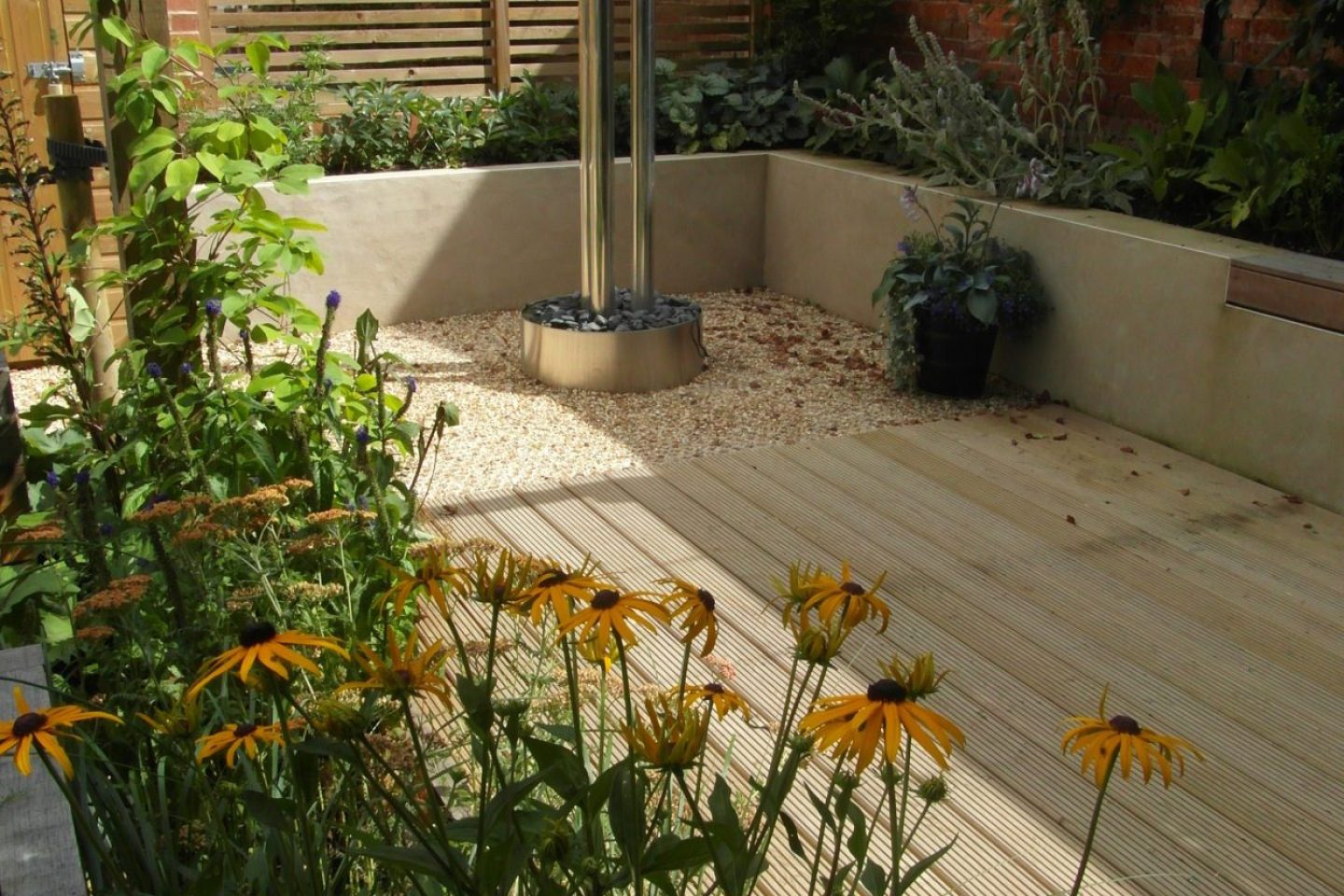
Clearing clutter
It is easy to accumulate things in the garden that have outlived their usefulness or we simply haven’t got round to disposing of. Old toys, frost damaged pots, left over building materials, things which you thought might be useful one day, but couldn’t fit in the shed etc. We are good at ignoring these things! If you bite the bullet and have a good clear out you can see more clearly how much space you have.
Once you've finished clearing, you can see more clearly how much space you have and will likely to start feel better already.
Designer tricks
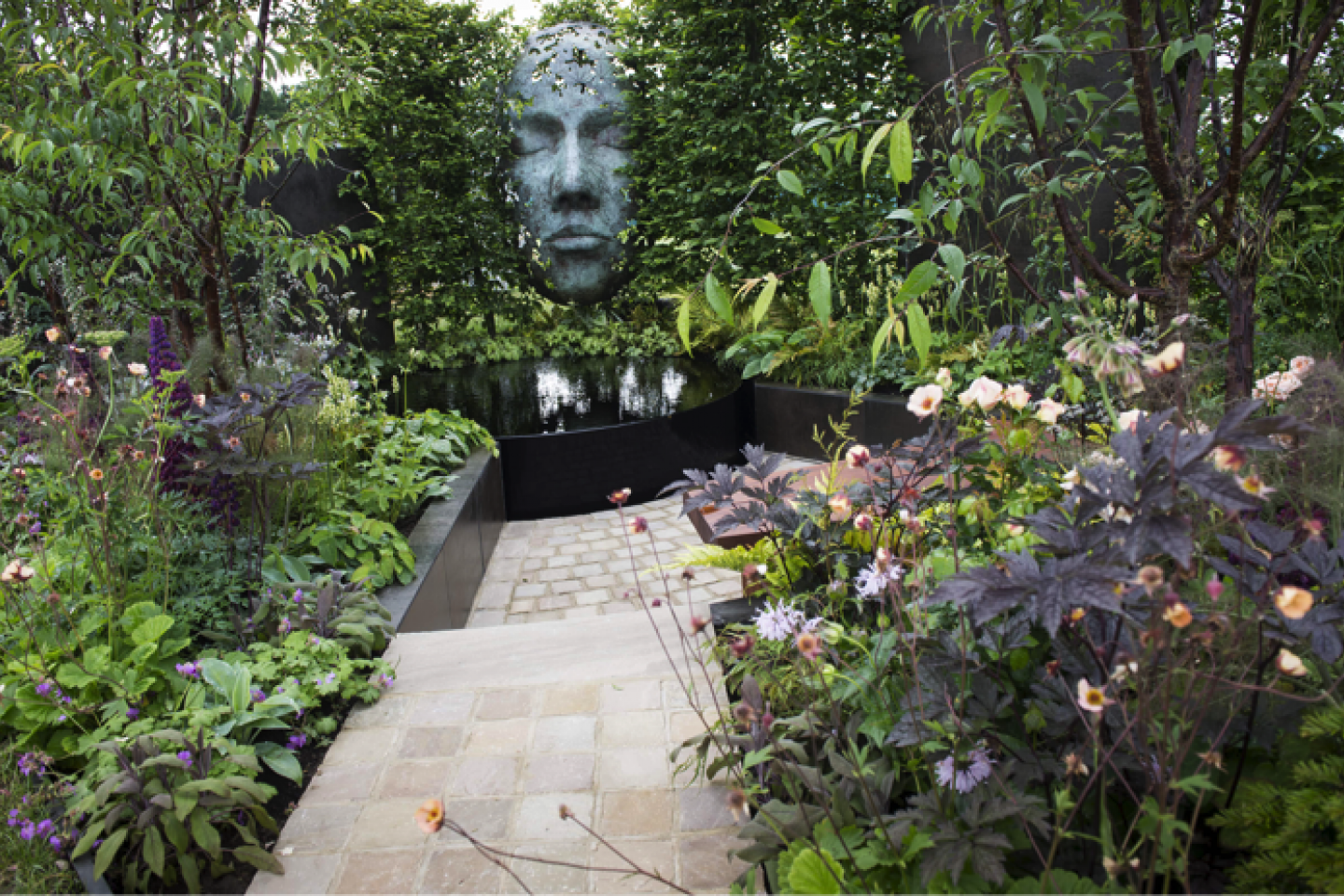
There are several tricks that are used by garden designers to make a space feel bigger than it really is. These include:
In 2019, I built a show garden in support of Thrive. This included many of these tricks as the garden only measured 6x4 metres! If you would like to learn more, you can read my guide to designing small gardens.
Lawns
A very small patch of lawn can look out of place and can actually be one of the highest maintenance parts of the garden. Small gardens often have the shade from neighbouring houses or trees and a lawn needs work to keep it healthy. Lawnmowers also take up more storage space than other garden tools.
Instead of lawn, think about using paving or gravel, broken up by flower beds to soften and green up the space.
Adding height with structures
Adding structures such as arches, pergolas or simple obelisks lead your eye upwards. This takes your attention away from the boundaries and makes the space feel bigger. They also do this by breaking up the space and creating more interest.
Large shrubs and trees also have this effect. It can really be worth considering adding a tree even in a small garden. There are plenty of trees that suit small gardens, such as Amelanchier lamarckii which has a light canopy and a long season of interest.
Clever seating
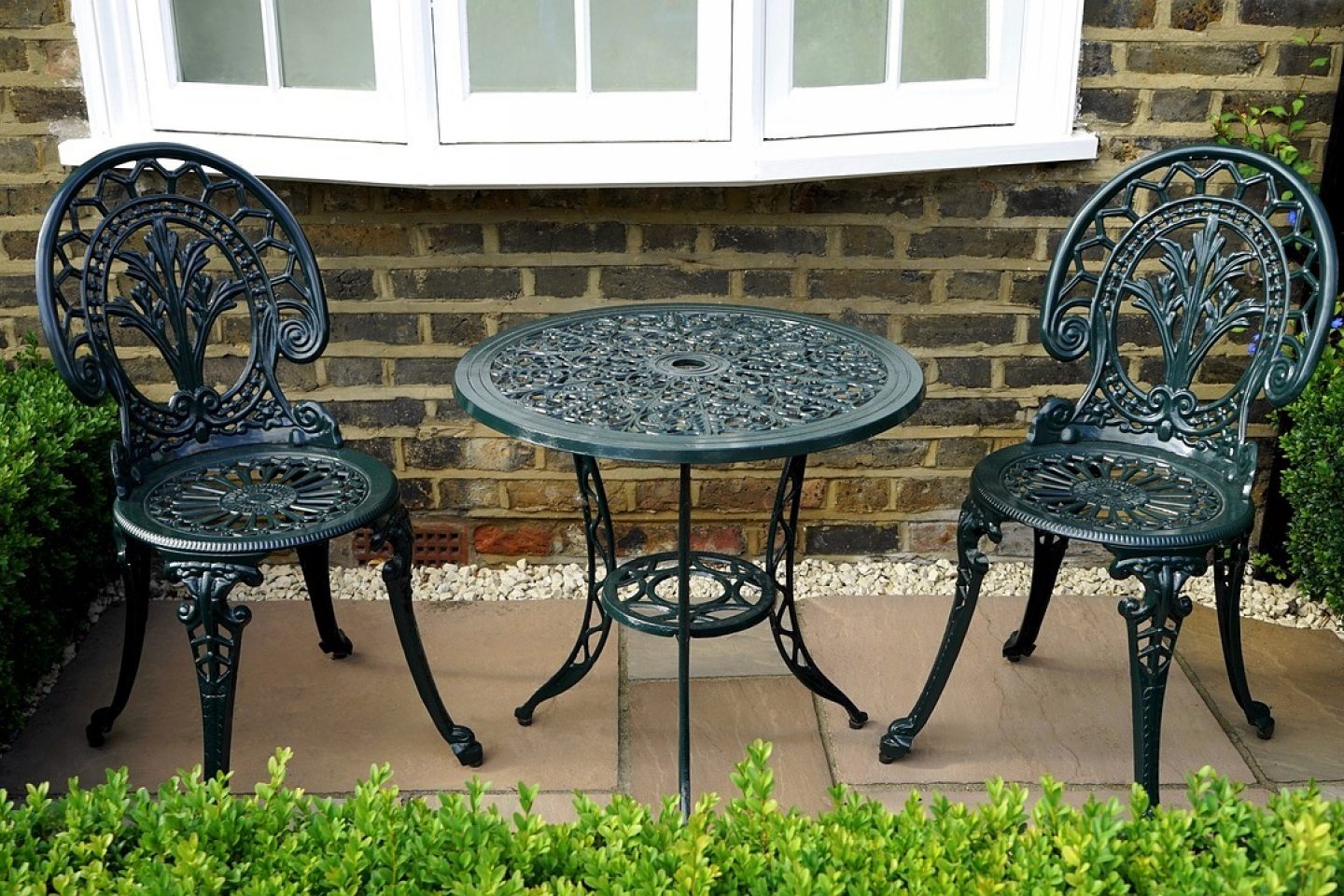
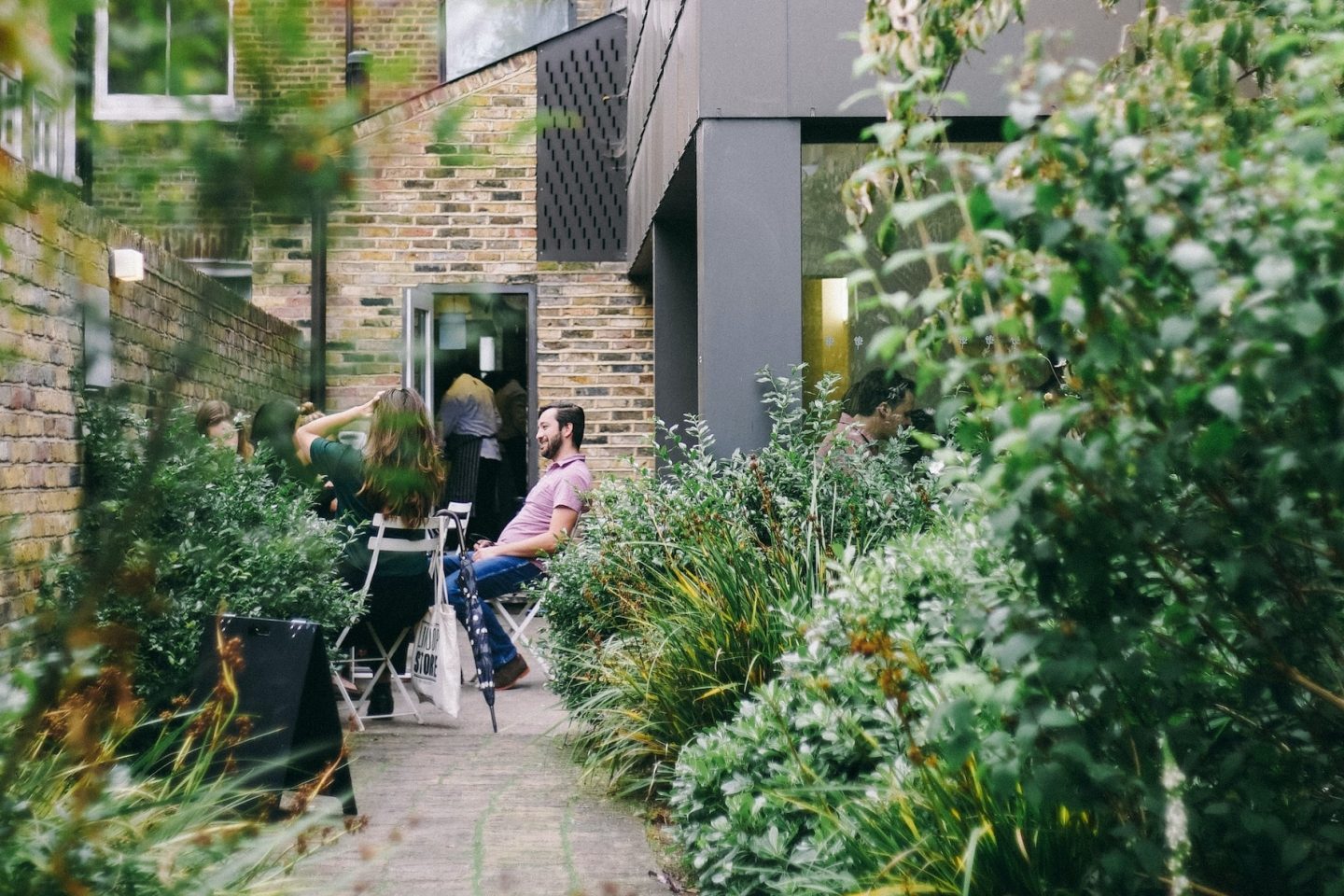
Seating that does not take up too much space is a good idea. Small bistro furniture works well as the chairs can be folded up and it can be moved around easily.
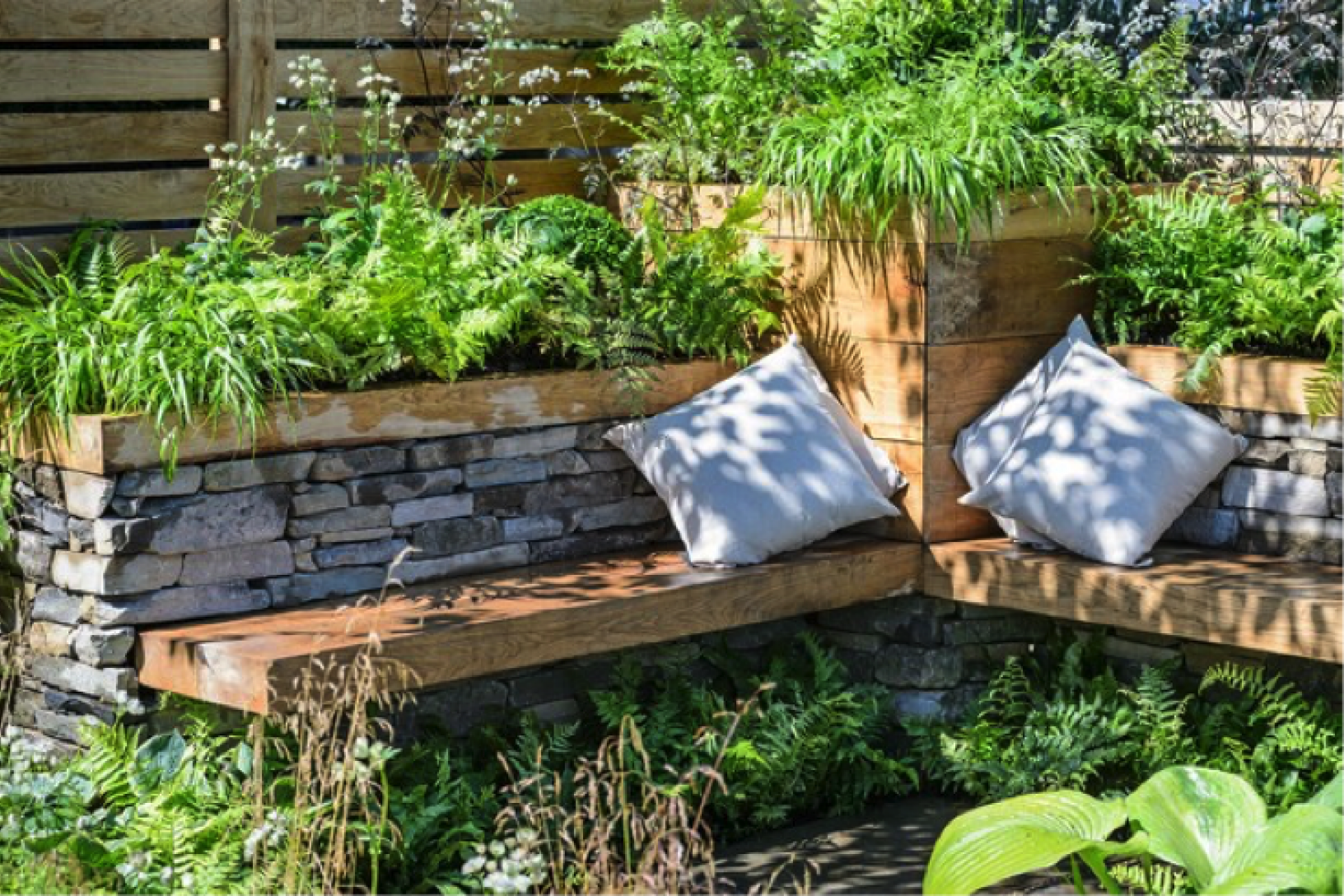
Another space saving device is to build bench seating into a boundary or retaining wall. These areas can become focal points and features in their own right.
Using containers
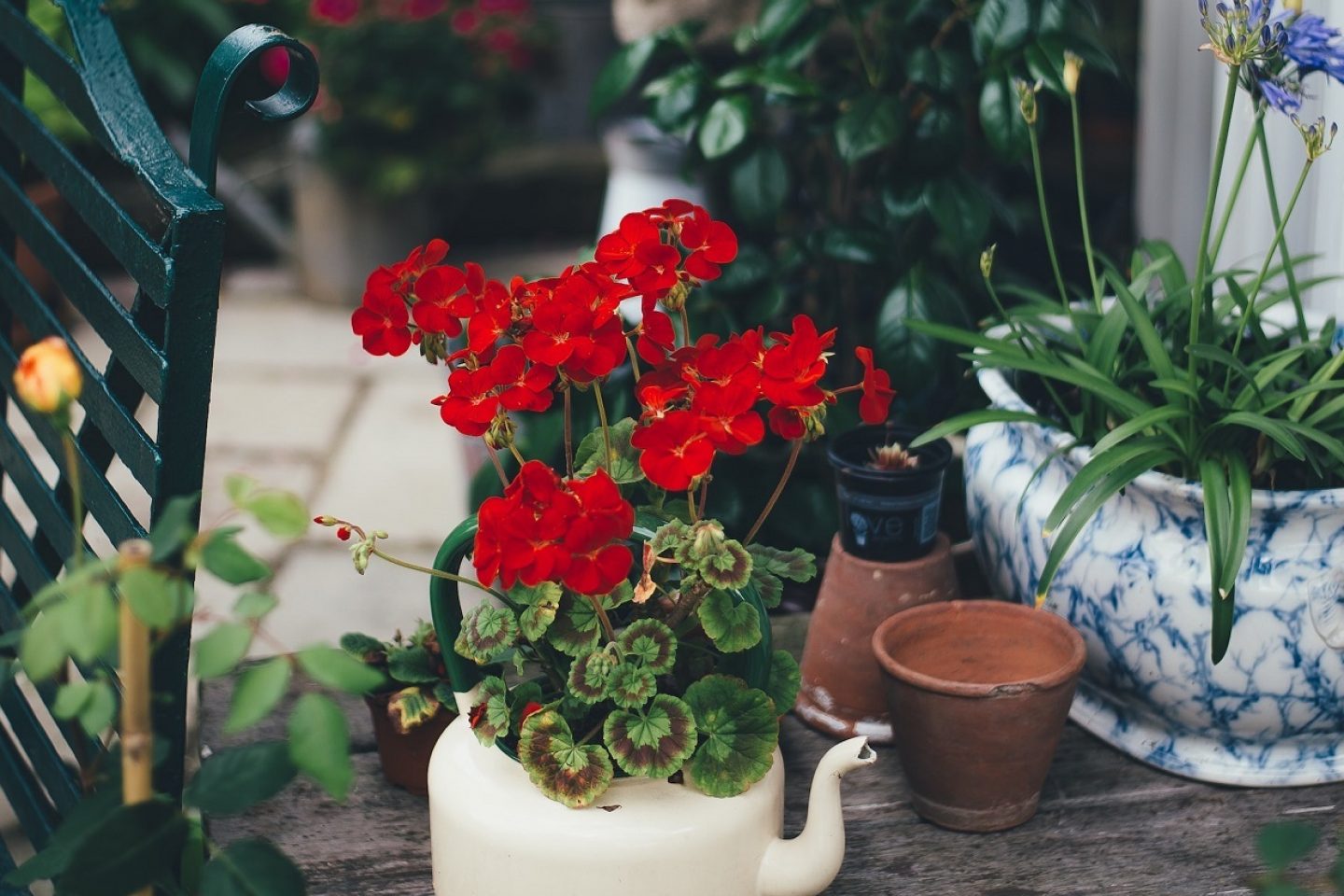
The great thing about gardening with pots is that they are flexible and easy to maintain. You can rearrange your pots as different plants are looking at their best and have fun experimenting with different plant combinations.
Limit the number of colours and different sizes of pots if you can as this feels more harmonious and relaxing. Including at least one really large pot is a good idea. It makes more of a statement and has more presence than several smaller pots. Read this guide to container gardening for more ideas.
Planting upwards
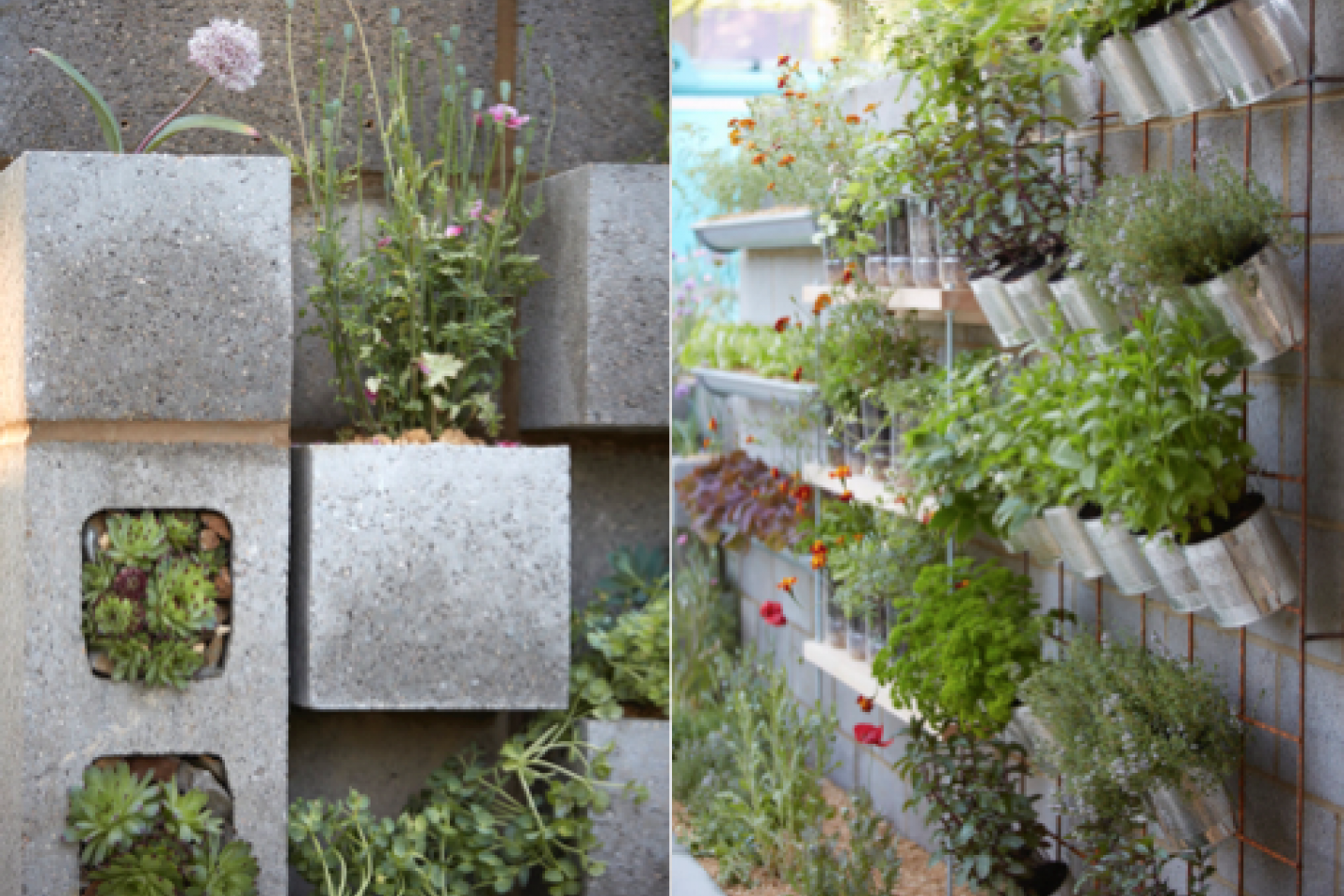
You can make a space feel bigger by using vertical surfaces. Green walls have become more popular. These allow you to increase the amount of green in your garden by planting up a wall. Growing climbers up a fence or wall has a similar effect. Trachelospermum jasminoides is a good choice of climber. It is evergreen and provides a heavenly scent throughout the summer months.
You could get creative with how you grow plants as part of a green wall. You could plant in old tins, in gutters secured to the wall or in the pockets of concrete breeze blocks. See an example of this below in a garden at RHS Chelsea Flower Show, designed by Tom Massey (inspired by the gardens created in Syrian refugee camps).
Attracting wildlife
If you have added a tree, they provide an invaluable habitat for wildlife. Other things you can do to welcome in more wildlife and make your space a more interesting place to be are:
See more interesting tips and guides from Richard Rogers at richardrogersdesigns.com

Gardens are special spaces. They can improve our wellbeing in many ways, helping us feel calm or giving a sense of purpose.


