

Helpful information
Timing: Winter
Where to do it: Indoors
Garden space: Large garden, small garden, balcony, no garden
Timing: Winter
Where to do it: Indoors
Garden space: Large garden, small garden, balcony, no garden

The winter months might be a quieter time for gardening. But, you can still appreciate nature's bounty and make great use of it.
A festive foraged candle bowl is simple and quick to make. It's a good opportunity to combine a sensory stroll with collecting.
What items to forage
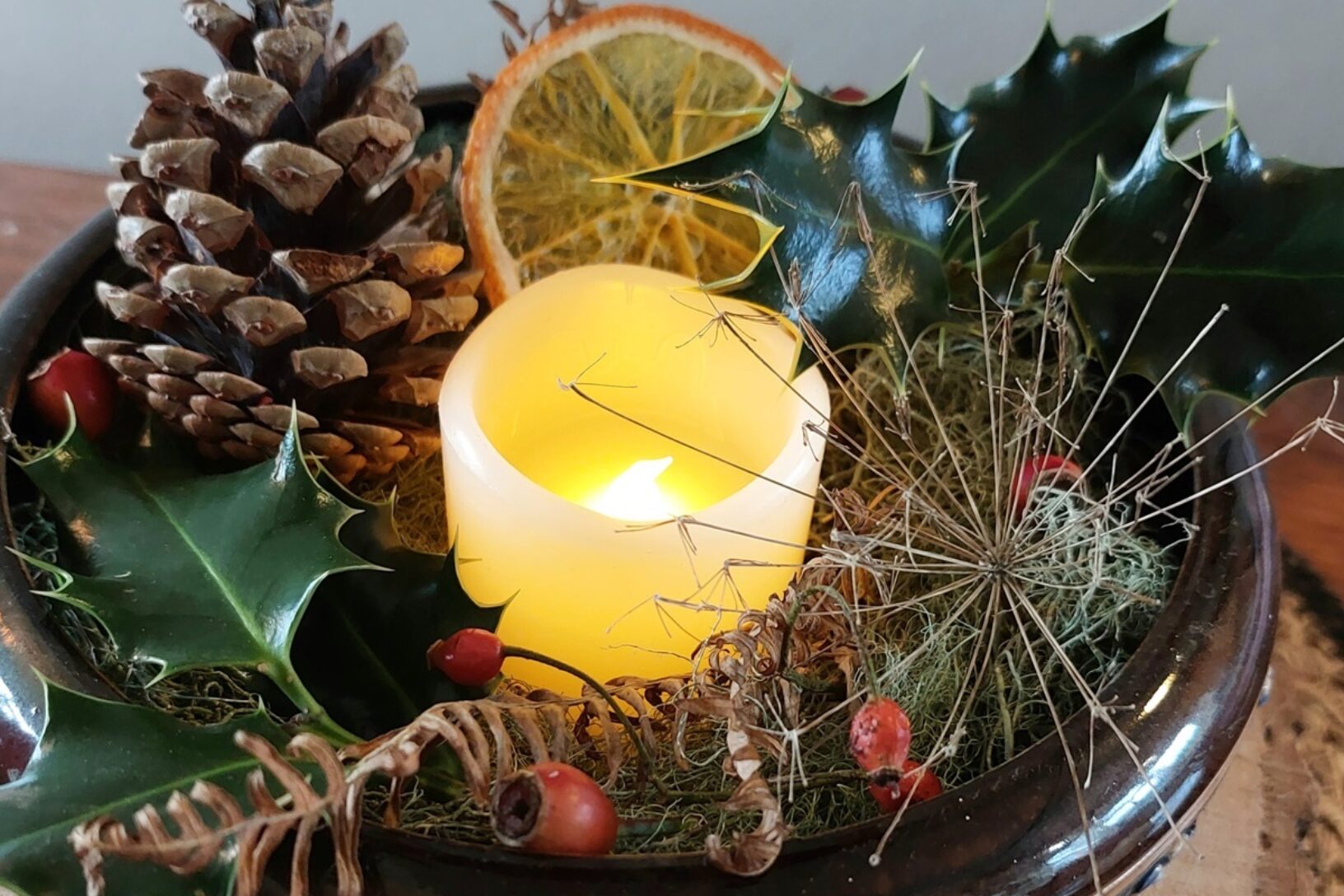
The festive candle bowl in the top photograph uses string-of-sausages lichen, pine cones, rosehips, holly sprigs, dried toothpick-weed seed heads and dried bracken fronds. Any natural materials can be chosen, such as:
Be sure to only take a small amount of plant material and leave plenty behind, as wildlife use many of these materials over winter for shelter and food.
It's a good idea to wear gardening gloves when collecting, to avoid thorns or sharp edges.
If you are unsure of exactly what a natural item is, you could try using an identification tool on your phone. Google Lens, for example, allows you to take a photo and then will make suggestions about what it could be.
Essential items
Optional items
To make dried orange slices if adding them:
1. Carefully slice an orange into 0.5cm thick rounds.
2. Arrange the slices onto baking paper on a wire rack.
3. Dry them in the oven at 140C/120C fan for 45 mins- 1 hour (turn the slices half way through)
4. Remove from oven and once cooled they are ready to use
Any leftover slices can be strung on the Christmas tree for a delightful natural orange glow!
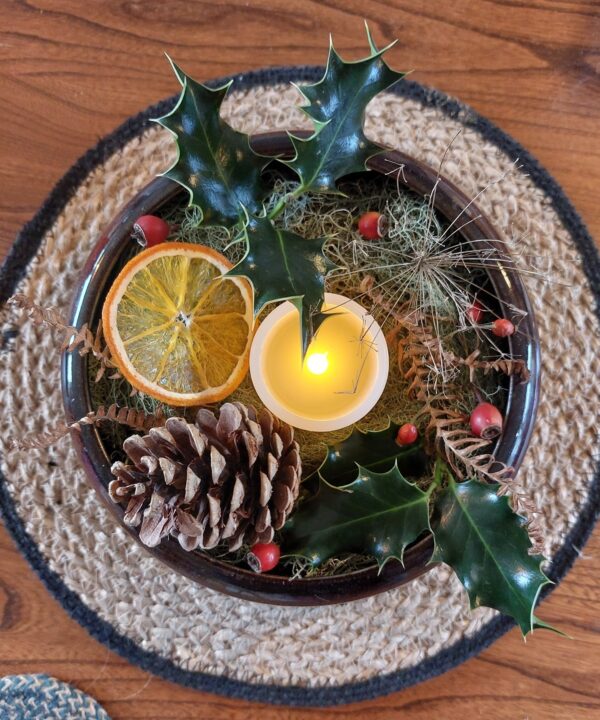
Follow these steps to create your festive foraged candle bowl with ease.
Step 1 - Gather everything you need
This may include taking a short foraging walk. Bring gardening gloves, scissors or secateurs and a bag to collect items when you go.
Once you have all the foraged materials you would like to use, find a comfortable place to assemble your bowl. A table inside is ideal.
Step 2 - Position the candle
Start by placing the candle in the centre of the bowl.
Step 3 - Add any soft material
Next, use softer materials such as moss, dried leaves or lichen to form a soft nest for the other foraged items to sit in.
Step 4 - Arrange the remaining items around the candle
Arrange any other items in a wreath-like pattern, going clockwise around the candle. Try placing the larger items first, and then add the smaller bits such as rosehips last. Using tweezers might help if there is any spiky material such as holly.
Ensure that the candle is easy to take out to turn on and off.
Wash your hands after handling the materials and assembling the bowl.
Congratulations, you have created a beautiful centrepiece to enjoy from natural materials!
Once your project is complete, place it somewhere like a dining table, mantlepiece or a shelf for you and others to enjoy over the winter.
You do not need to do anything to maintain the display over winter - it won't need watering, for example.
Depending on what material you've used, some of it may go drier and browner in time, but that is part of the charm.
Lucy Cox is a horticulturist based in Devon. She has worked all over the UK in various botanical gardens and for several conservation projects. She currently runs her own market garden and gardening business. In her spare time she likes to be in nature foraging, hiking and gardening.

Fancy trying something different in the garden? Market gardener Lucy Cox shares eight unusual fruit and vegetables that can make a unique addition to the usual garden staples.


