

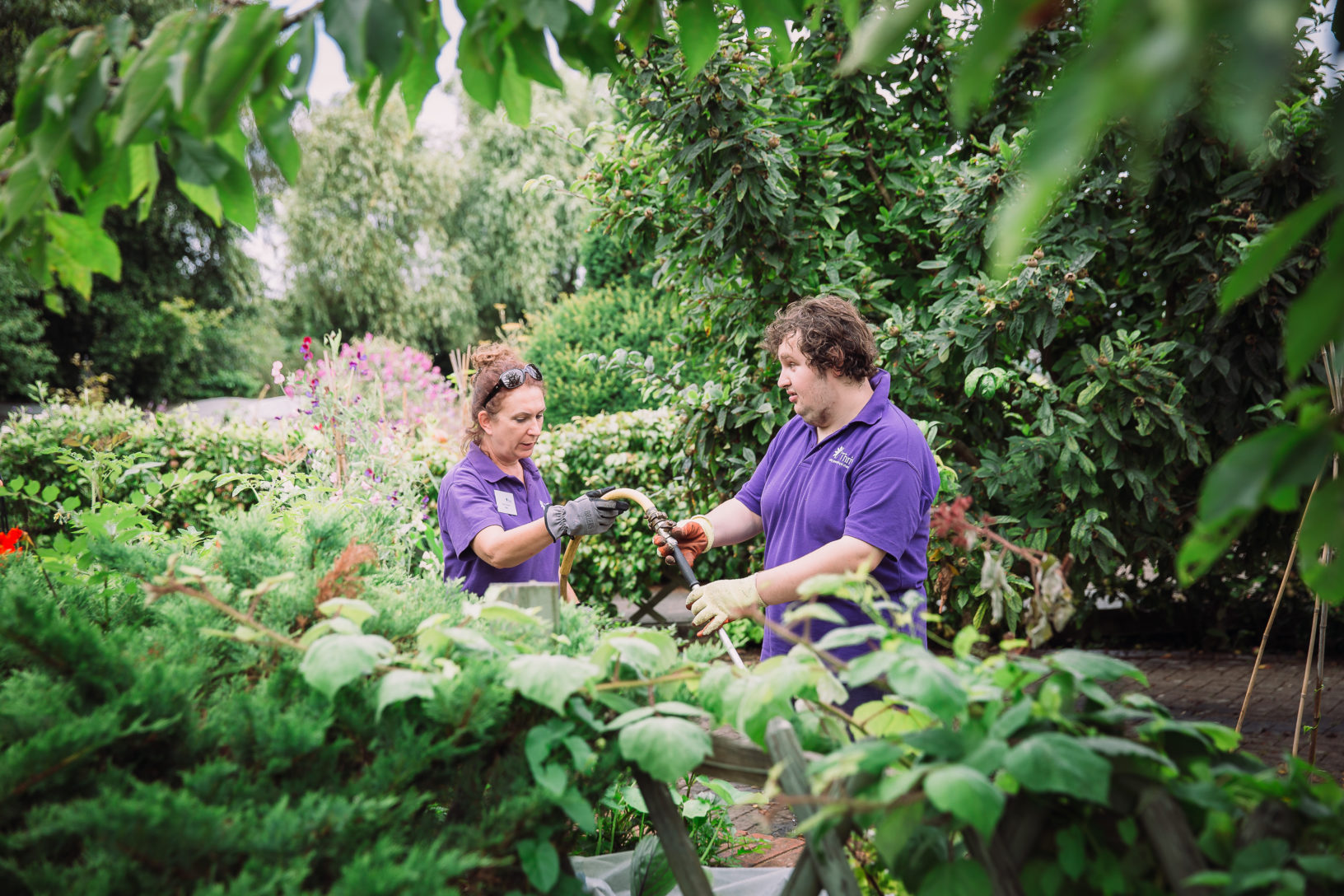

In 2002, the BBC reported on our work exploring whether gardening could be prescribed more widely by doctors. Reflecting on the benefits of horticulture for mental health and wellbeing, Thrive's Timothy Spurgeon said: "We know it works, we now just have to prove it."
Almost 25 years later, the evidence base has grown substantially.
Last week, Thrive and the National Academy for Social Prescribing launched new Green Social Prescribing Practitioner Guidance, that will help organisations make and receive appropriate referrals from health professionals, improving confidence, reducing risk and supporting better outcomes for people accessing nature-based interventions.
This week, we submitted evidence to the Government's Mental Health Strategy consultation on behalf of the Social and Therapeutic Horticulture (STH) sector. With our core point being – the evidence and referral pathways are now there. But the commissioning isn’t!
Our submission highlights how STH can support prevention, recovery, step-down care and long-term wellbeing. Recent research has found significant reductions in symptoms of depression and anxiety when accessing STH, while wider evidence on nature-based interventions continues to demonstrate positive impacts on mental health and wellbeing.
In addition, evaluation of the Cross-Government Green Social Prescribing Programme demonstrated that nature-based approaches can engage populations who do not typically access clinical mental health services, highlighting our value in reaching underserved communities and reducing inequalities in access to support.
Our submission calls for:
In many ways, the submission feels like another chapter in a story that began nearly five decades ago. The question is no longer does it work or can we prove it. The challenge now is ensuring that evidence-informed interventions such as STH are recognised, commissioned and available to everyone who could benefit from them.