Helpful information
Timing: All year around
Where to do it: Outdoors, indoors
Garden space: Small garden, balcony, allotment
Timing: All year around
Where to do it: Outdoors, indoors
Garden space: Small garden, balcony, allotment

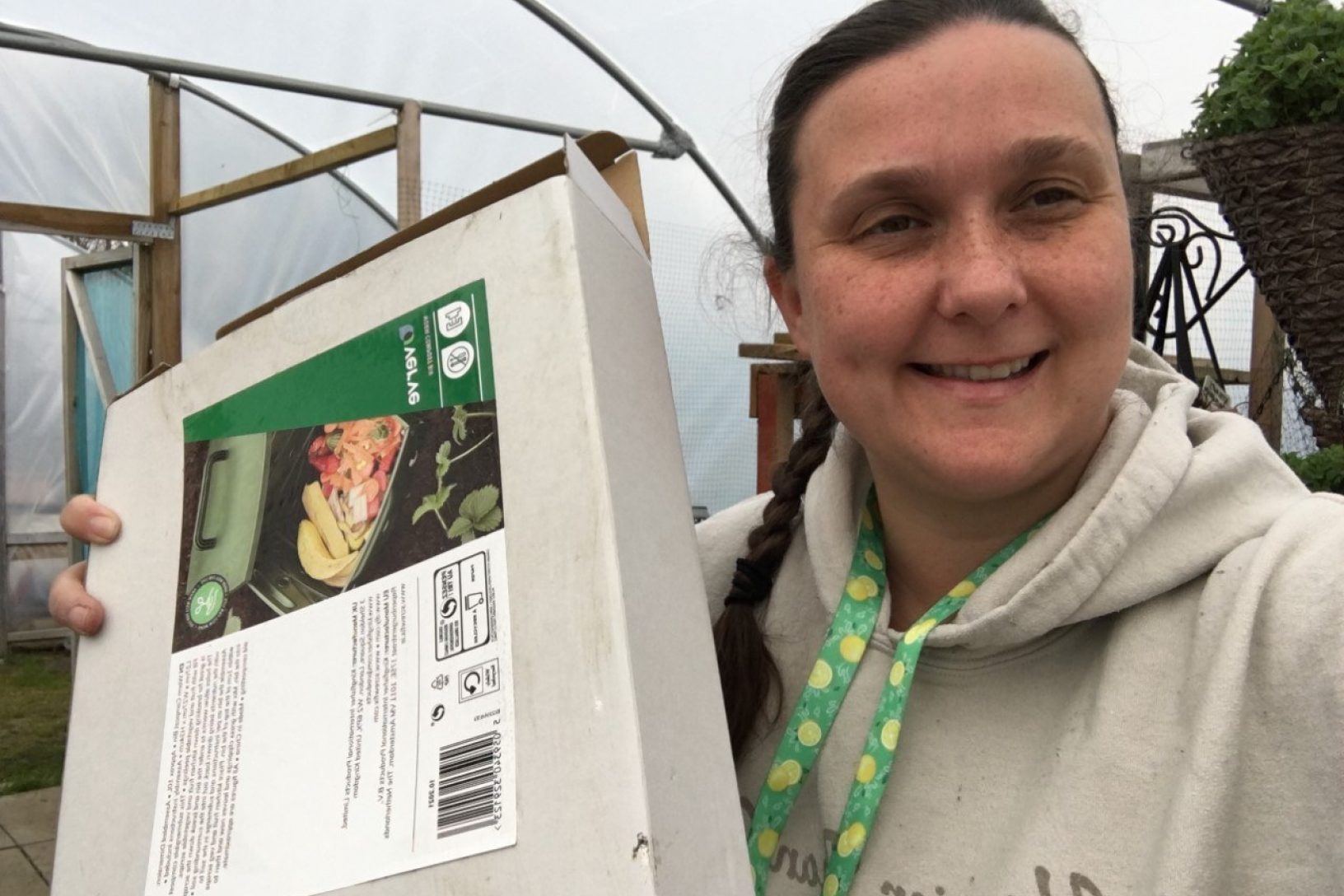
I am very passionate about recycling and reusing as much as I can in the garden. At my polytunnel allotment this year, I wanted to add a composter. It is a small space, so I decided to look into alternatives to help me recycle my kitchen waste and plant waste.
When I was researching what options were available, I came across a worm composter!
A worm composter is different from a normal compost bin. It is sunken into your raised bed and has holes in the side of the bin. These allow the worms to get into the bin and to help airflow.
It also turns out that a worm composter doesn‘t just attract worms. I have found woodlice and slugs in mine too!
Worm compost is great for all plants – especially house plants, fruit bushes and vegetables.
You can add a worm composter indoors or outdoors. You can even get a worm composter with legs which can be kept in your kitchen!
The good thing about worm composting is it can make compost quickly. You might have new compost in three months!
If you have mobility issues, keep your worm composter in a convenient location. You could place it as near as possible to your kitchen so you don't have to walk as far to deposit fruit and vegetables etc.
Have your composter at a suitable height. This will make it easier to add things in and take them out.

You can add any of these items to your worm composter:
Avoid adding any of the following to your worm composter:
If you want to add worms to your composter, you can buy vermicomposting worms online. The best worms to add to your worm composter are called red wriggles or red worms.

Making compost is an environmentally friendly way to give your plants the nutrients they need. This guide shows you how to make it, where to use it plus top tips to compost with ease.